

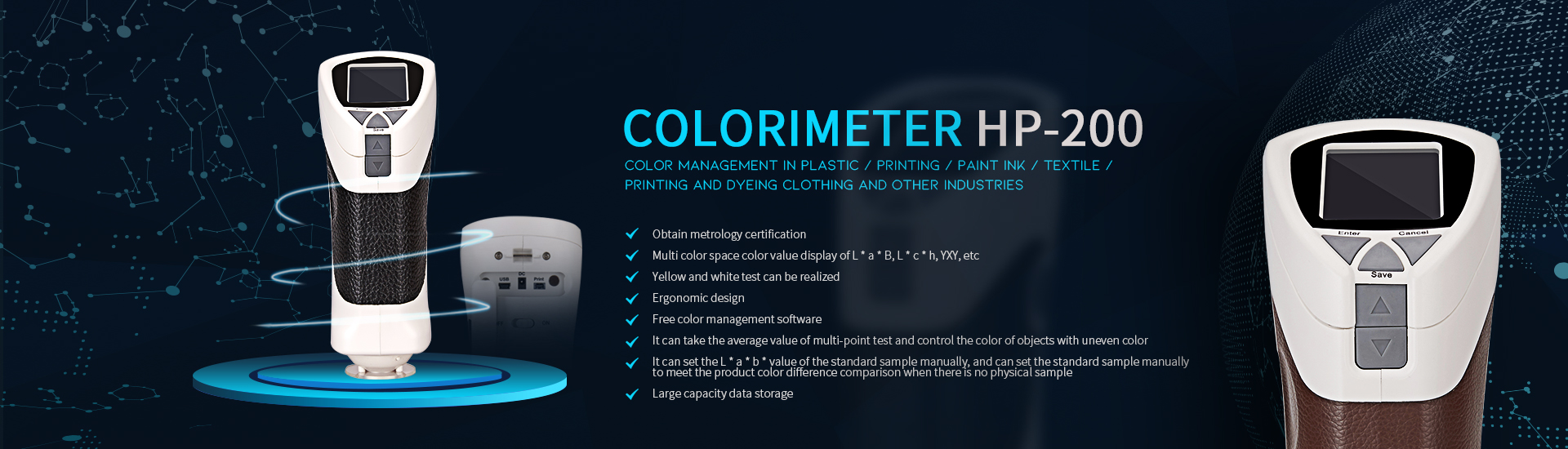
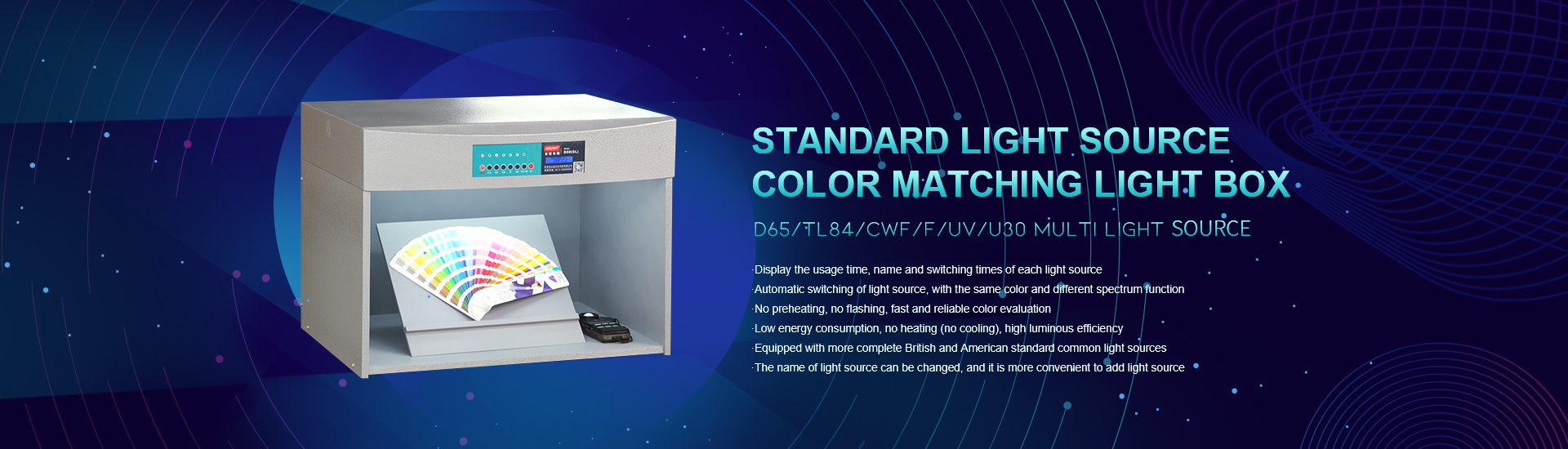
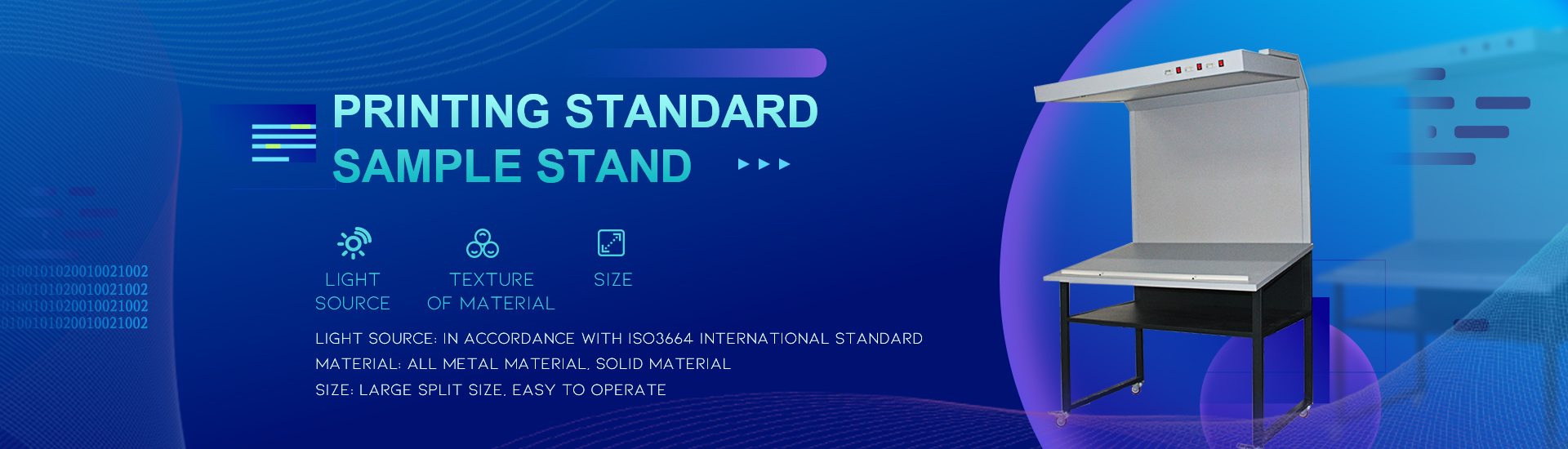
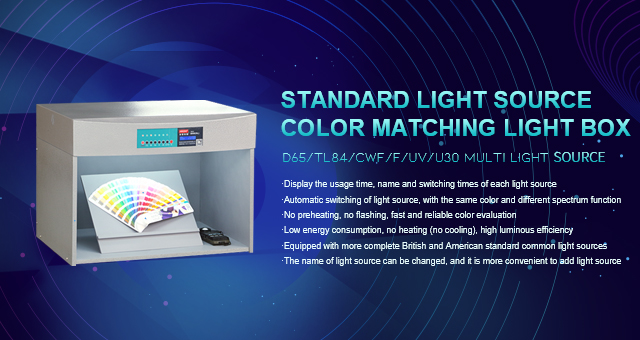
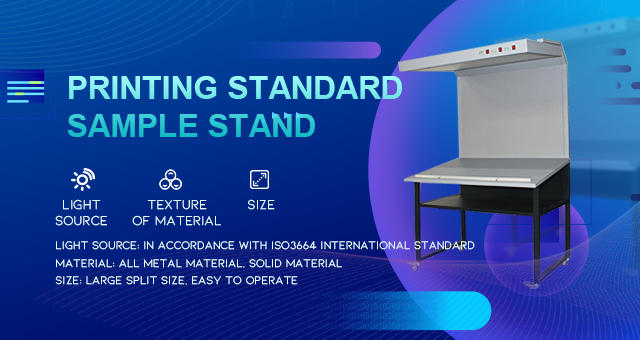


The quality of printed matter directly affects the quality of printed products and is an important basis for inspecting product quality in modern industrial production. Testing the color level of printed matter in a standard light source box has become a widely used method in industry today. Because the printed paper used in the industry may have a large color difference after printing, and the surface treatment of the printed matter will cause a lot of color changes, it is necessary to use a standard light source box to control color quality.
The surface treatment of printed paper includes lamination (light film, sub film), glazing, calendering, oiling, printing and so on. After the surface treatment of the printed matter, a standard light source box is used to detect the color and the color change is obvious. This is because the paper undergoes a physical or chemical reaction during the surface treatment process. In short, this reaction affects the overall printed matter color. The physical change is mainly reflected in the increased specular reflection on the product surface, which has a certain effect on the color density. Chemical changes mainly come from laminating glue, varnish, UV oil and so on. These materials contain a variety of solvents. Mixing different solvents together is likely to produce a chemical reaction, and the color of the printing ink layer changes. Therefore, when printing for packaging, the standard light source box must be used to strictly control the color of the print. When processing and evaluating the color, the physical and chemical changes of the printing must be taken into account, so as to more accurately determine the density of the ink layer during printing. Value and L * a * b *.
When checking the color of printed products, there must be a light source. Colors cannot be seen without a light source, but the color of the product seen by different observers is also very different. Generally, we use the standard light source box to choose the D65 light source that simulates natural light as the illuminating body, but this is when the customer has no special requirements. Some printed materials may be applied in a special environment. The color detection and evaluation must be performed according to customer requirements. In addition, the existence of metamerism must be noted.
There are two points to note in the control of printed colors:
The first is the use of a standard light source box to provide a standard lighting test product set environment (light source wavelength of about 400-700).
The second is to pay attention to the choice of lighting source and observation angle.
For products with high color requirements, we must pay attention to the angle selection of color detection and evaluation, and place standard samples on it for comparison, so that the observation angle difference is small, and the color identification is relatively accurate. Therefore, the process practice tells us that the characteristics of the light source and the difference in viewing angle will directly affect the accurate discrimination of the color.


