

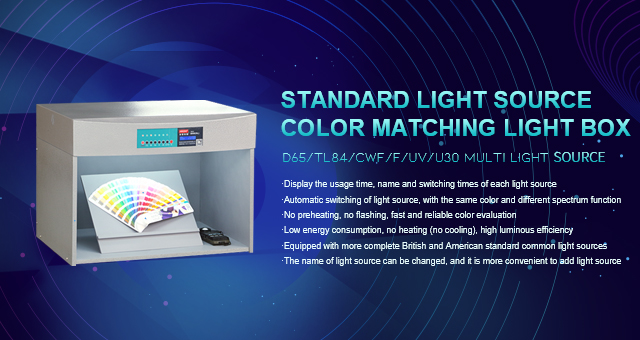
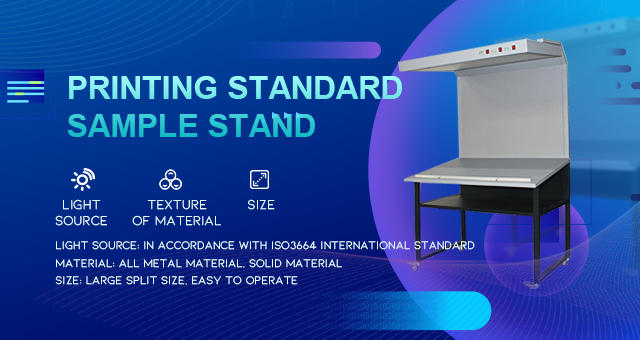


Whiteness is a property of high reflectivity and low saturation (purity) of a color. White is a color group, in a narrow range with a dominant wavelength of about 470 to 570 nm. In general, its brightness is y> 70 and its excitation purity Pe <0.1. Although white is not a single color (monochrome), most observers can arrange the order according to the difference in whiteness according to the spectral reflectance, excitation purity, and dominant wavelength of the white sample. For a given set of white samples, their order of arrangement will not only be different because of different observers. Even if the same observer is evaluated by different methods, the results will be different. On the other hand, the evaluation of the whiteness of the sample is also related to the preference of the observer. For example, some prefer white with red light, some prefer white with blue light, and some observers prefer white with green light. Observers' personal preferences are different. In addition, the evaluation result of whiteness is also closely related to the change of observation conditions. Observing the same sample under different brightness or light sources with different spectral power distributions will result in different results. In actual production, there are two common methods for evaluating whiteness. One is the colorimetric method, which compares the measured sample with a standard sample with known whiteness. Another method is to use a whiteness measuring instrument to measure. Many whiteness calculation formulas have been stored in the instrument. During the measurement, the instrument automatically selects the corresponding whiteness formula for calculation according to the user's settings, and directly outputs the whiteness value. This method is objective because of the evaluation conditions, so the evaluation results are objective.
I. Whiteness calculation formula based on ideal white
This type of calculation formula essentially calculates the color difference between the sample white (sample color) and the ideal white.
(1) Hunter whiteness formula
This formula defines the whiteness of a totally reflective diffuser as 100, compares the whiteness of the sample with the whiteness of the completely reflective diffuser, and evaluates the whiteness of the sample by calculating the color difference.

In the formula, L, a, and b are the lightness index and the chromaticity index of the sample in the Lab system, and k1 is a constant. Generally, the value is 1.
ap, bP is the whiteness index of the ideal white in the Lab system,
In general:
Ap = 0.00, bP = 0.00 when measuring samples without fluorescence;
Ap = 3.50, bP = -15.87 when measuring samples with fluorescence:
(2) CIE1982 Whiteness Evaluation Formula (Gantz Whiteness Formula)
The CIE1982 whiteness evaluation formula is a formula for evaluating whiteness recommended by the International Lighting Commission. This formula was proposed by Eganz of Ciba-Lunch, and it has three expressions.
1. With blue in green as favorite white, the expression is:

2. With red in blue as favorite white, the expression is:

3. Take neutral achromatic as favorite white, the formula is:


In the formula, x0, y0 are the chromaticity coordinates of ideal white in a 2 degree field of view, Y, x, y are the lightness index and chromaticity coordinates of the sample; W is the greater the value of whiteness in a 2 degree field of view. , Indicates the greater the whiteness of the sample; Tw is the hue offset value of the sample in a 2 degree field of view (light-toned value, that is, a certain hue value with white slightly). Tw> 0, the sample is green, and the larger the value, the greener it is; Tw <0, the sample is reddish, and the larger the absolute value, the more reddish it is.
For a completely diffuse reflector, W = 100 and Tw = 0.
Second, the whiteness determination formula derived on the basis of the experimental sample reflectance determination
1. Single-band whiteness formula
There are two formulas for whiteness expressed by the reflectance of a certain spectral region.
(1) Use W to indicate whiteness, and G to indicate the reflectance of green light, that is, to use the reflectance of green light to express the whiteness of a sample.
(2) The reflectance corresponding to blue light is represented by R457, that is, the whiteness of the sample is expressed by the reflectance of blue light.
The International Organization for Standardization (ISO) uses blue light with a dominant wavelength of 457.0nm ± 0.5nm and a half-peak width of 44nm to determine the reflectance of a sample in the paper industry. The reflectance in the short wavelength region and R457 are used to indicate the whiteness. Called ISO whiteness or blue light whiteness.
2. Multi-band whiteness formula
There are two types of whiteness formulas, such as the reflectance of a specific wavelength range and its coefficient, to express the whiteness of the sample.
(1) Aluminum ratio (Taube) formula.
The whiteness is represented by the difference between the blue light reflectance B and the green light reflectance G, multiplied by a coefficient.
W = 4B-3G
(2) Use the yellowness index to represent whiteness, the formula is:
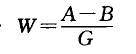
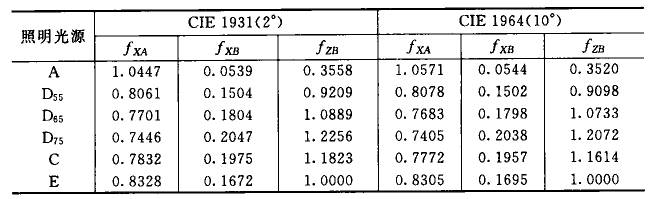
A, G, and B in the formula correspond to the reflection ratios of the red, green, and blue bands respectively, and are the reflection ratio values detected by the red, green, and blue detectors corrected by the corresponding filters. They can be calculated using the tristimulus values of the sample color:
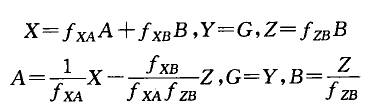
Table 1 Corresponding fXA, fXB, fZB values of different lighting sources in different fields of view
These two types of formulas each have advantages and disadvantages. The first type is derived by using favorite white as a complete diffuse reflector, and it is difficult to correctly evaluate the sample added with the fluorescent whitening agent. The two formulas introduced earlier use the method of introducing an empirical coefficient in the formula to calculate the whiteness of the sample with the fluorescent whitening agent added, so the calculation results are also approximate. As for the second type of formula, if the sample is more bluish, the obtained whiteness value will be larger, which is inconsistent with the actual situation, but it is very suitable for calculating the whiteness of the sample added with fluorescent whitening agent.
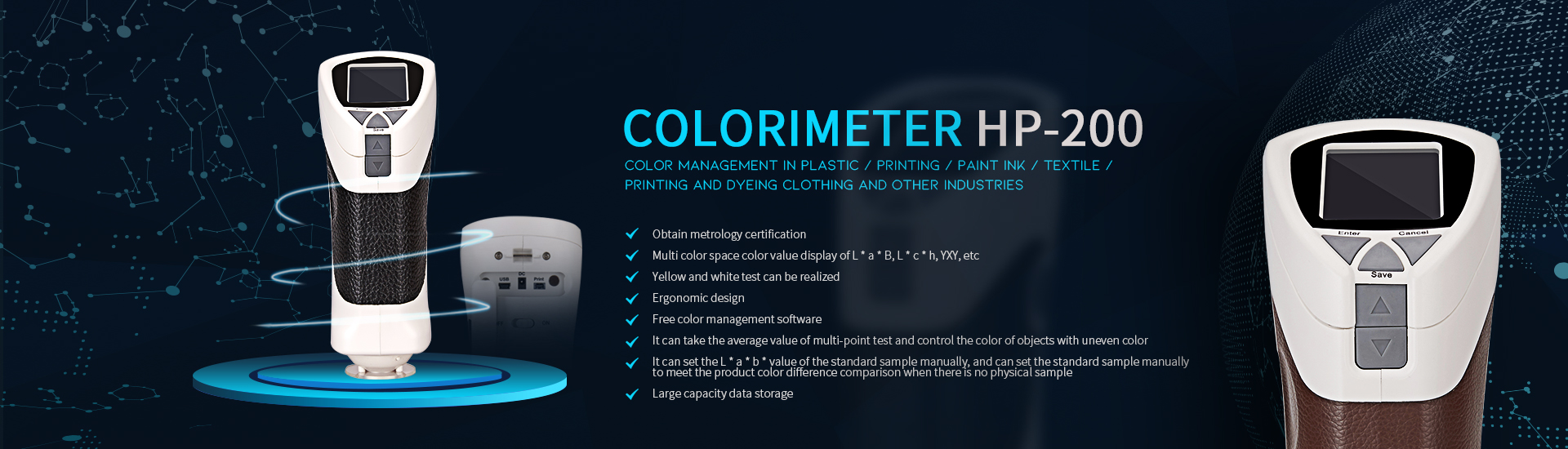
Precision color difference meter series products (CS-200, CS-210, CS-220) can display Hunter whiteness value and Ganz whiteness value.
Spectrophotometer series products (CS-580, CS-600, CS-610, CS-660) can select all whiteness calculation formulas, and display the whiteness value information evaluated by various whiteness formulas.


