




Observation conditions
When observing the color of a sample, there must be no other materials on the test bench, and the test area must not have any brightly colored decorations. If the operator is wearing colored or bright clothes, he should put on a neutral gray coat. Do not wear colored contact lenses or glass glasses during operation to avoid affecting color perception. In some cases, evaluating materials under natural light is also optional, but when daily weather conditions, latitude of the observation location, observation date, and year of observation are different, natural light is variable, which can lead to false evaluation results. If due to the limitation of the conditions, it is necessary to do the outdoor natural light evaluation of color, it should be done at noon, and the color in the middle part of the sample needs to be observed.
Observation position
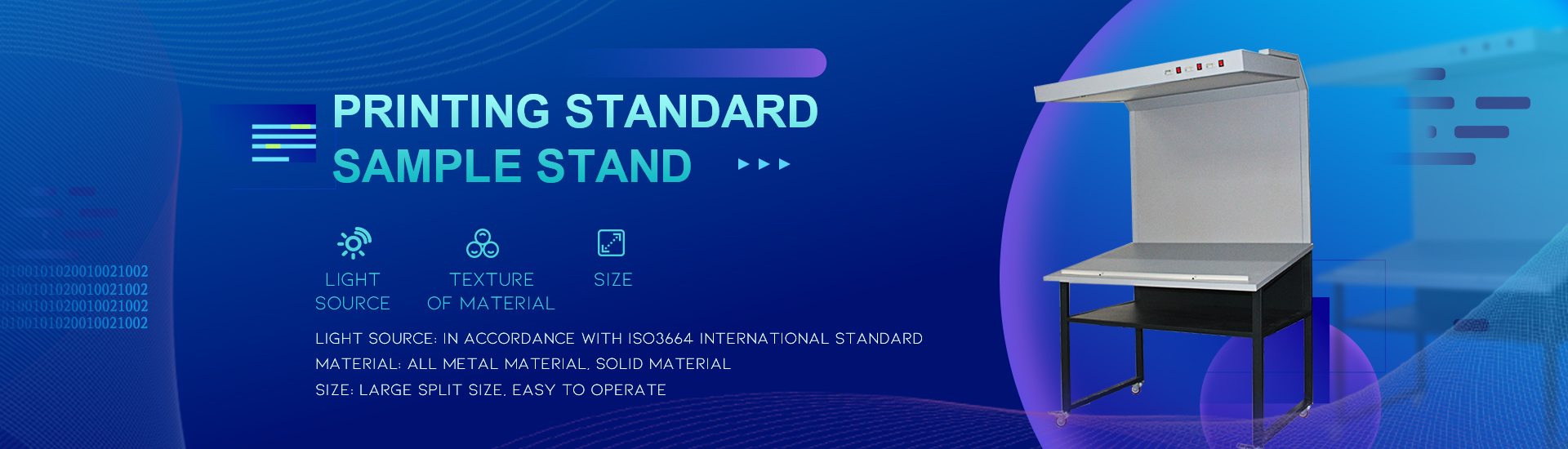
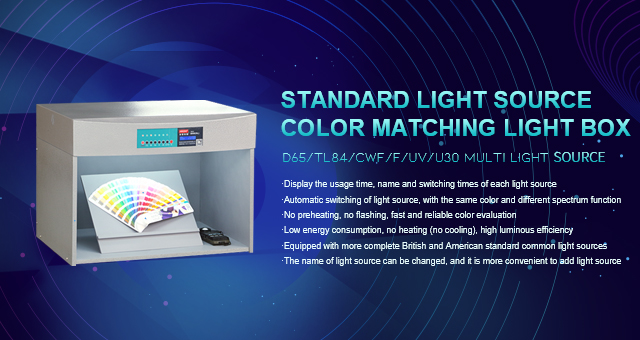
The sample should be placed parallel to the center of the sample table lamp strip. When observing the surface of the sample table, the observer should adjust the relative position with the sample so that the hue, brightness and chromaticity can be accurately evaluated. All samples should be observed under standard daylight, fluorescent and curtain light. Among them, fluorescent light is an important light source in color evaluation, and fluorescent and curtain light are used to evaluate the same color spectrum. It should be noted that the color should be judged quickly, because as the exposure time increases, the eye's sensitivity to color differences decreases.
Textile materials should observe the position of the fine hairs (fabric on the surface of the fabric) of the samples and standards that are in contact with each other. The method of placing the sample is that when rubbing the material, the hand moves along the fabric to the top of the sample table and feels the position of rough hairs, keeping the radial direction of the fabric along the observation platform.
When rotating the plane of the test bench to 180 degrees and 90 degrees, or between the two, the sample and standard should match (the fine hairs of the two materials should be in the same direction).
Materials such as paint or smooth flat, plastic, leather or vinyl can be divided into monochrome and metallic (including milky white). Monochrome is usually viewed from a horizontal position and a bird's-eye view. For plastic material samples and standards, they should face the same or similar resin flow in the same direction. Observation horizontal position is obtained through the observation surface parallel to the observer, so that the line of sight is almost perpendicular to the surface. Rotate the sample away from the observer and get a top-down position by 90 degrees down the horizontal position. Both locations should be examined for color matching. Metal or milky white can be viewed in the same way. Due to changes in painting technology and painting conditions, a color difference may occur between the intermediate angles between the two samples.
When comparing samples and standards with the naked eye, due to the specified relative position between the materials, the sample is generally flipped from left to right and top to bottom to observe the effect of color.


