

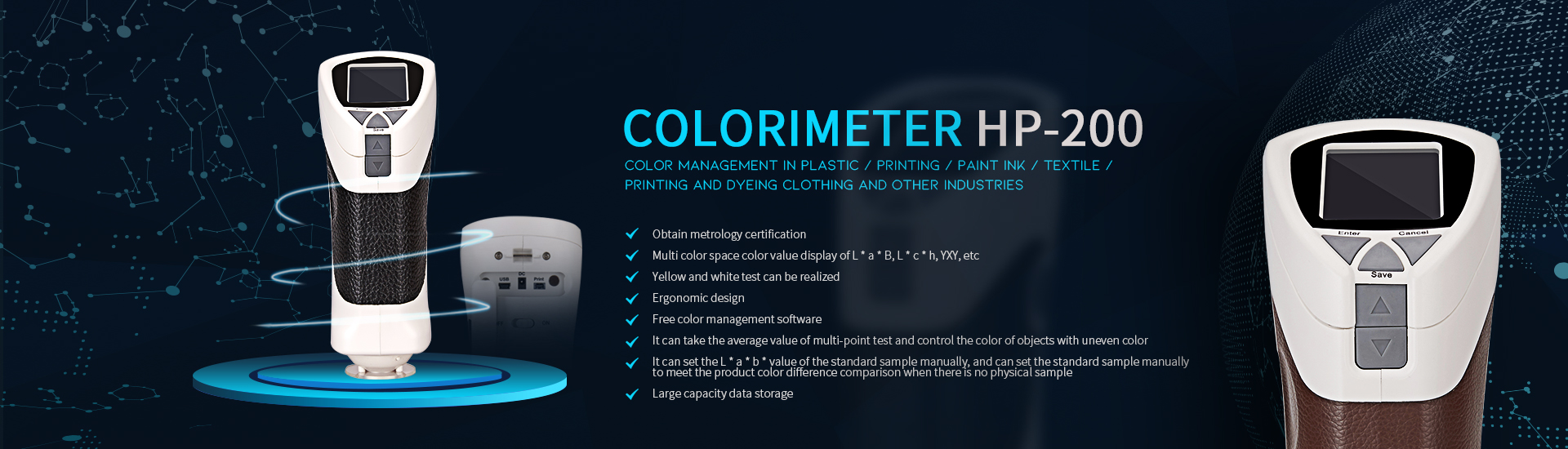
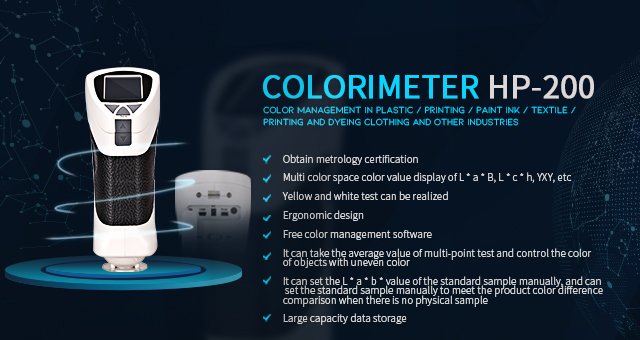


Design of a handheld smart chroma colorimeter. The chromaticity test is a measurement of the basic parameters of the paint, textile, printing and dyeing industries. With the development of science and technology, the use of instruments for quantitative detection is fast and accurate. This method is gradually replacing the detection method of comparing standard color plates with human eyes. The color sensor produced by the company is a color sensor that can be set with a digital interface RGB color light to a frequency signal. The chromaticity and color difference meter based on this color sensor and computer technology has the advantages of simple structure, high accuracy, and intelligent calibration, which greatly improves the accuracy of color detection and reduces human subjective deviation.
Colorimeter
Design of a handheld smart chroma colorimeter. Detection light path The detection light path is based on an optical integrating sphere (a / o) structure ... that is, the sample is diffusely illuminated / vertically detected diffused illumination / vertical detected (d / 0) structure. The light source is emitted by a white LED in the middle. The light beam strikes the inner wall of the integrating sphere coated with reflective material. After multiple reflections, diffuse reflection light is irradiated to the detection El located at the bottom of the integrating sphere to illuminate the sample to be detected. The color sensor is installed on the top of the integrating sphere, and the colored light of the sample is received by the color sensor through the convex lens.
Design of a handheld smart chroma colorimeter. Press the standard board calibration button to enter the standard board calibration state, first calibrate the black body, and then every time you press the standard board calibration button, the calibration color is converted in the sequence of blue, green, red, yellow, and white. Press the test button in each calibration color state to complete the calibration of the corresponding standard plate data. After all calibrations are completed, return to the sample detection state; the standard plate calibration work cannot be entered into the sample detection state, but in the sample detection state, as long as the standard plate calibration button is pressed, the standard plate calibration state is immediately entered.


